

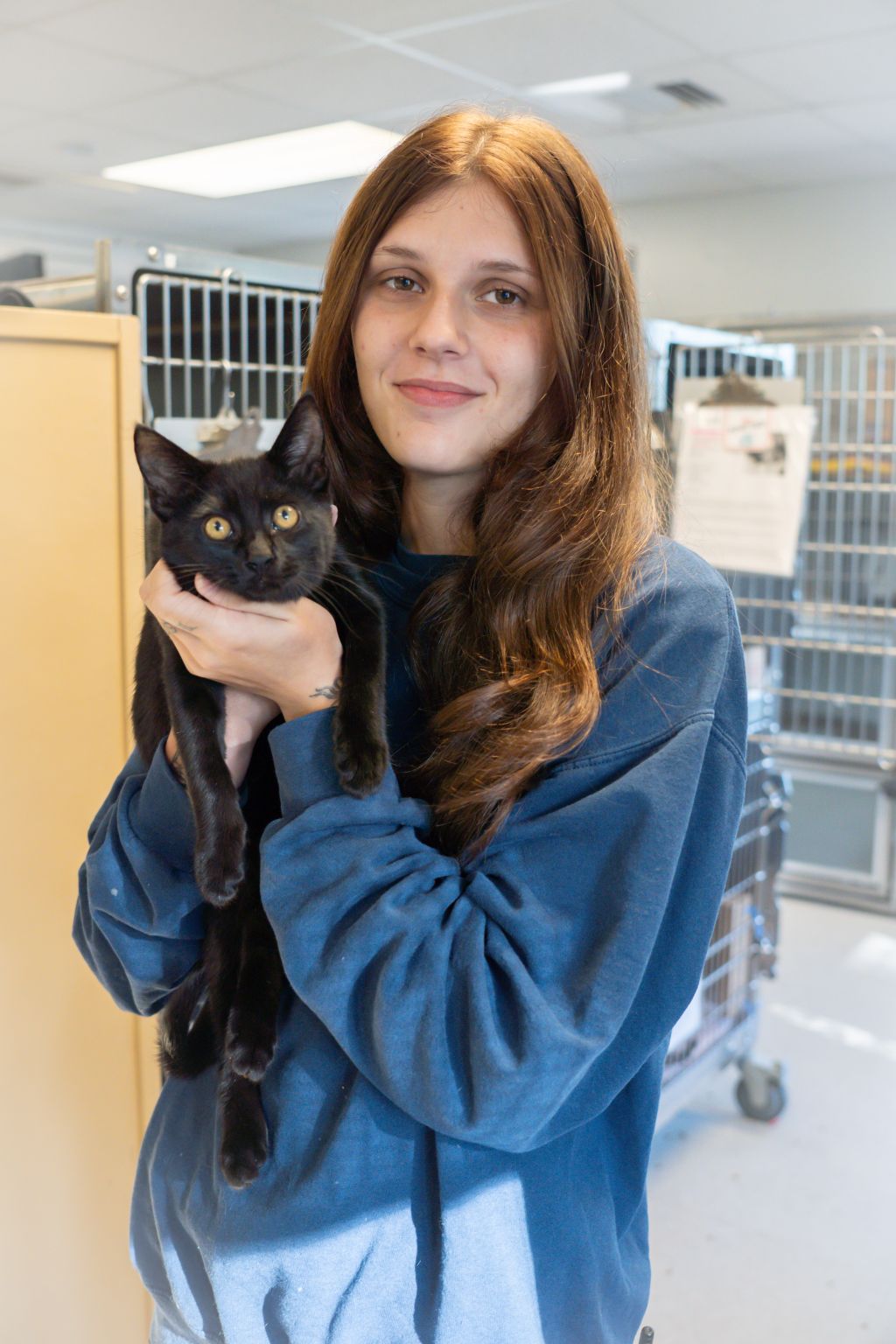
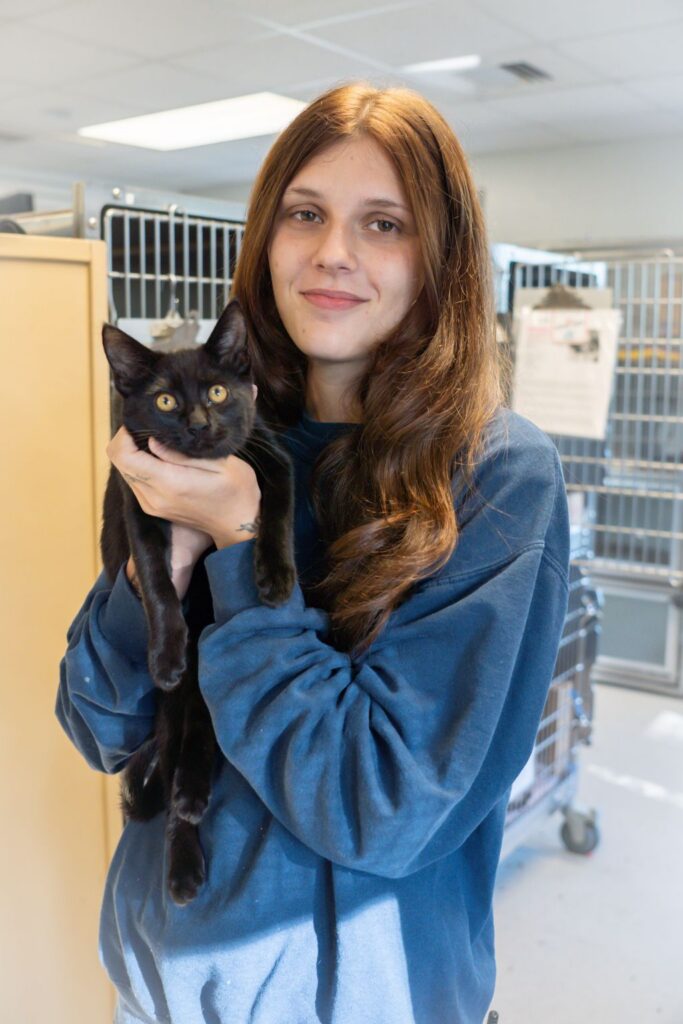
Name: Lauren Goodman
Position: Behavior Specialist
How long have you been part of the ARL team: I’ve been a part of the ARL team for 3 years now!
Do you have any pets at home? Tell us about them: I’m a cat mom to five cats who all have their own very different personalities! I have four boys—Spinks, Burton, Super Tiny Baby Cat, and Vermin, and one senior lady, Bug, who is definitely the ruler of the house despite only having one tooth. I’ve had Spinks, Burton, and Super Tiny Baby Cat, and Vermin since they were kittens, so I’ve gotten to experience all the different stages of raising and caring for cats. Spinks was my very first cat and is quite the adventurous guy—he’s harness trained, loves going for car rides and walks, and even has a recall! Burton was bottle-raised and is probably the most innocent and sweet cat I own. He absolutely loves his mouse toys, especially his very well-loved, completely destroyed green mouse. Super Tiny Baby Cat is my biggest cuddle bug and is happiest when he can be right by your side. He’s a huge purr box, even during things he absolutely hates, like nail trims, and he will do just about anything for food. Vermin came home with me from the ARL after being returned a few times for behavioral challenges. He’s more of a loner who enjoys relaxing on the couch or kitchen table, but once nighttime rolls around, he turns into a completely different cat and loves chasing his spring toys around the house!
What inspired you to pursue a career in animal welfare: I’ve always loved animals and grew up surrounded by dogs, so caring for animals has always been a big part of my life. As I got older, I naturally found myself working in animal-related jobs, including pet stores, dog grooming salons, and pet sitting, which only made my passion for animals grow stronger. I’ve always wanted to make a difference in the lives of animals, and working in animal welfare has given me the opportunity to do just that. Being able to help animals feel safe, build their confidence, and find the right home is incredibly rewarding and is what continues to inspire me in this career.
Can you tell us a little about your role at ARL and what a typical day looks like: A typical day at the ARL as an Animal Care Behavior Specialist starts with morning cleaning and making sure all of the animals are comfortable and ready for the day. Once that’s done, we get to focus on the more hands-on and rewarding parts of the job, including dog walking, playgroups, behavior assessments, behavior modification for both cats and dogs, and helping scared or shut-down animals come out of their shells and build trust and confidence.
What are some of the most common behaviors or challenge you help shelter animals work through: We can experience a lot of different behaviors here in the shelter, including jumpy/mouthy behavior, stranger danger, dog reactivity, and leash biting. These behaviors can stem from a variety of factors, including adjusting to a new routine and environment, inadequate socialization, negative past experiences or trauma, self-soothing behaviors, overarousal, and frustration.
We help these dogs work through these behaviors using a variety of behavior modification techniques and individualized approaches. This can include muzzle training, structured playgroups, and foster placements. Our goal is to help each dog better cope with their environment, build confidence, learn alternative behaviors, and ultimately increase their ability to successfully transition into an adoptive home.
What is one behavior-related tip you wish every pet owner knew: “Our dogs are doing the best they can with the education we’ve given them in the environment we’ve put them in. – Susan Garrett.
Can you tell us about an animal success story that has stuck with you: Duncan arrived at the shelter with high FAS (Fear, Anxiety, and Stress) levels. As a result, he was often jumpy, mouthy, and would occasionally bite the leash during walks. Duncan had also not been properly socialized and did not know how to interact appropriately with other dogs. He would become highly over aroused, leading to frustration when he was unable to reach them, which was displayed through biting, growling, and excessive vocalization. To help address these behaviors, Duncan participated in daily playgroups with a well-socialized, “bomb-proof” dog. These sessions allowed him to learn appropriate dog-to-dog interactions in a controlled environment. Over time, this training also improved his behavior on walks by reducing leash biting, jumpiness, and mouthiness. With continued support and consistent socialization, Duncan made tremendous progress and was soon adopted into his forever home.
What’s your favorite way to spend a day when you’re not at ARL: I’m a HUGEEEEE fan of bed rotting with my kitty cats buttttt, when I’m not doing that, I have a bunch of random silly hobbies like tattoos, nails, pinning bugs, etc.
Final words of wisdom: TAKE CARE OF YOURSELF!!!
Leave a Reply