
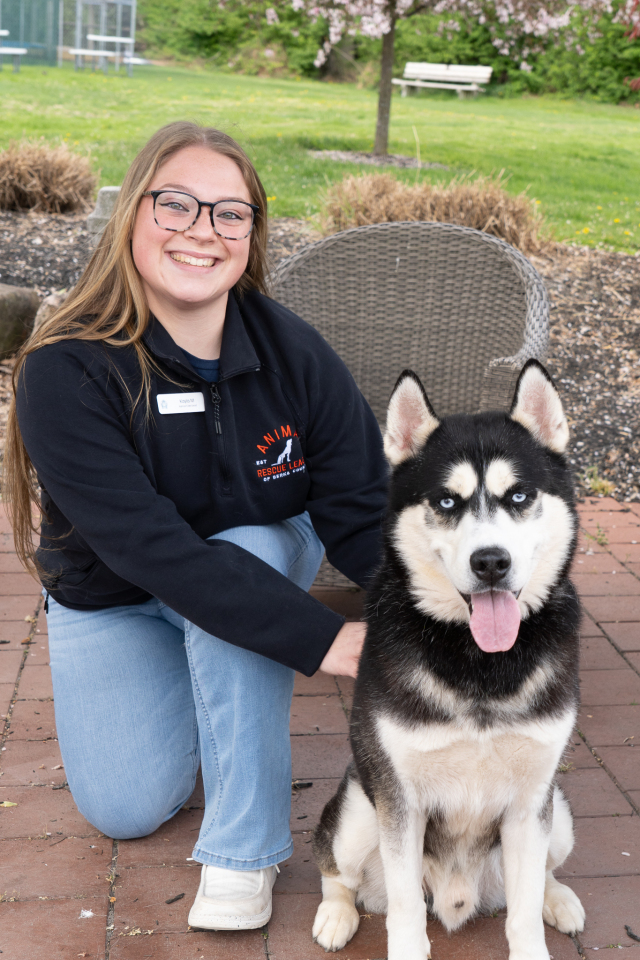
Name: Kayla Mercado
Position: Lead Animal Care Specialist
How long have you been part of the ARL team: I have been with the ARL for 2 years now.
What does a typical day look like for you: A typical day for me starts at 9 AM. I begin by reviewing all the animals who are ready to be put up for adoption, creating bios based on each animal’s personality, and making sure they have good photos and are ready to be listed as available.
Then, we have our animal care huddle, where we go over key updates, upcoming items, and dog movement—such as which dogs can move to the back. If I’m not assisting animal care with morning cleaning, I work with Brooke on cat movement throughout the shelter, deciding which cats go to the front and which return to the cat room.
Once those tasks are complete, I print kennel cards, highlight the animals who are available, and hang the cards on the kennels. After the morning tasks are finished, I check in with animal care staff in different areas to make sure everyone is doing well and doesn’t need help.
I then assist with dog walking, playgroups, and other miscellaneous tasks throughout the day. Around 4:00–4:30 PM, we have our afternoon huddle, where we check in with each other, confirm room assignments, and review the status of dog walks and who still needs to go out.
After the afternoon huddle, one staff member typically begins preparing food while others start cleaning kennel areas or take out another dog before feeding begins. At the end of the day, once potty walks are finished, we double-check all kennels to ensure every animal is in the correct space, kennels are secured, and no dogs are left outside due to weather.
Finally, we do one last walkthrough to make sure dryers are turned off and windows are closed before clocking out and heading home.
What’s your favorite part of working hands-on with the animals each day: My favorite aspect of working hands-on with the animals each day is being an integral part of their time in the shelter. I value the opportunity to support them by addressing their behavioral needs and providing a calm, reassuring presence for those who are fearful or withdrawn. Observing their progress from intake through adoption or reclaim is a truly meaningful and rewarding experience.
As a lead, how do you support and guide the Animal Care team: As a lead, I provide support to the animal care team as needed, whether that involves assisting with cleaning during staffing shortages or helping team members manage the demands of peak seasons when kennels and cat spaces are at full capacity. I offer guidance when clarification is needed and serve as a supportive listener when staff members have concerns or frustrations.
I work closely with Brooke to identify opportunities to enhance the animals’ quality of life, including developing new enrichment ideas and activities for the dogs. Additionally, I share knowledge and respond to questions to ensure staff feel informed and supported in their roles.
Can you share a memorable animal or moment that has stuck with you: A memorable animal that stuck with me was a German Shepherd named Charlie. While he was a bit of a troublemaker during his time here, he was especially memorable because I had the opportunity to transport him to a foster-based rescue in Delaware.
While that may seem small to some, it was a meaningful moment for me because I had never done anything like that before. I was grateful to be trusted with transporting him to a place where he could thrive outside of the shelter environment, as breeds like his often do not do well in the high-stress setting of a shelter.
He was a very sweet boy, and I was very happy to be part of that moment.
What’s the most rewarding part of seeing an animal go from intake to adoption: The most rewarding part of watching an animal go from intake to adoption is being part of each animal’s journey. Many animals arrive without a known background, and we have the opportunity to ensure their time in the shelter is filled with care, compassion, and attention.
It is especially meaningful to see animals who initially come in scared and uncertain gradually gain confidence. Watching them thrive after being adopted is an incredibly fulfilling experience.
What keeps you motivated on the tougher days: Even on the toughest days, what keeps me going is knowing we’re giving a voice to the voiceless. We advocate for and care for our animals as if they were our own, supporting them through the fear and uncertainty of entering the shelter and celebrating their progress along the way.
Whether it’s watching them thrive in playgroups, seeing their training begin to click, or simply giving them a much-needed 15-minute rest on a comfortable sofa in our bungalow, we find meaning in the small victories. Finding joy in those small wins really helps, especially when the work feels heavy. Showing up for them every day and being part of their journey is what keeps me motivated.
Do you have any pets at home? Tell us about them: I have a couple of pets at home, including two cats, Nova (2) and Pyro (6), as well as a bearded dragon named Peanut, two leopard geckos named Mr. T and Rex, and a chinchilla named Snowball, who was my first pet and is turning 18 this year. Nova was adopted from the shelter, and Pyro was rehomed to me by a family friend.
Each of them has their own quirks. Pyro has a funny habit of sleeping upside down, looking like he’s smiling. Nova is very energetic and can usually be found perched up high, whether that’s in her cat tree or somewhere she’s not supposed to be, like a bookshelf.
What makes ARL special to you: The ARL has held a very special place in my heart for a long time. I started volunteering here at 11 years old, walking dogs, going into the cat colonies for Book Buddies, and interacting with the rabbits. Now, working here at 23, it feels like a full-circle moment for me.
I always knew I wanted to do something with animals, and little did I know that returning to the place that made a huge impact on me early on would not only deepen my love for animal welfare, but also lead me to a career in the field.
What advice would you give to someone interested in working in animal care: Working in animal care might be considered “entry level,” but it’s an amazing way to step into animal welfare and build your skills. You get the chance to work one-on-one with animals every day, gaining real experience while forming genuine connections. Some of the best moments are the quiet ones—earning the trust of a shy dog or watching a nervous cat slowly come out of their shell. Those small wins feel huge and make the work incredibly rewarding.
As you go, you also learn how to read animal behavior, which makes everything smoother and more enjoyable for both you and the animals. It takes time, but that learning process is part of the experience. If you enjoy hands-on work, meaningful connections, and a lot of heartwarming moments along the way, it’s a really fulfilling place to start.
Final words of wisdom: If you’re willing to work hard and stay committed, your goals are absolutely within reach. Lean into what genuinely excites and motivates you, and revisit what once brought you joy. Sometimes, the path to your career has been with you all along.
Leave a Reply