

The Animal Rescue League of Berks County has been evolving since its establishment in 1952. Although our practices and policies, philosophies, and programs have evolved over time to meet the needs of today’s animals and our community while reflecting the best practices in the sheltering community, our mission to save and give second chances to many animals as possible has stayed constant throughout our long and rich history, which began with ARL’s foundress’s vision and dream to help as many animals as she could. Keep reading to see how we have evolved!
The beginning
Mary Archer, a prominent Berks County socialite and lifelong activist for animal welfare, who used most of her family’s wealth to help others resigned in 1950 from the board of the Humane Society of Berks County and decides to open her own animal shelter. By July of 1952, Mary organized and chartered her own organization which was operated through memberships and donations. While waiting for the first kennel to be constructed on 10 acres of her Flying Hills farm, all the animals in the ARL’s care lived in foster homes until they were adopted.
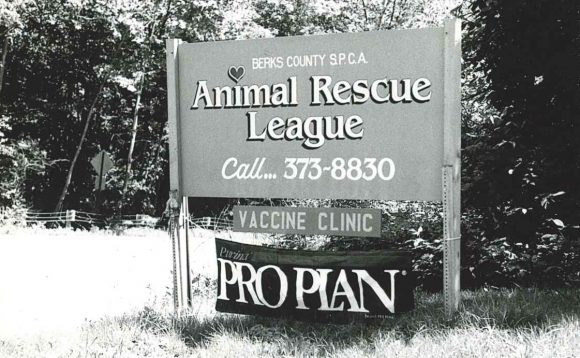

The first kennel building completed construction in September of 1953. This building hosted 40 kennels, a hospital room, an office and a kitchen. With the new resources, the ARL opened its kennel doors to 16 dogs and 4 cats on Sunday, October 18. By May 8th of the next year, over 700 dogs and 188 cats had been placed in homes and ARL membership reached a high of 800 members. Only three years later, by 1956, the ARL had helped 3,316 dogs and 979 cats find homes. Mary’s mission was being fulfilled.
The loss of Miss Archer in March 1963 was a devastating blow to the members of the ARL emotionally and financially only 10 years after opening the shelter. While she left the ARL her land that the shelter was built on, the organization had little money left to keep the doors open.
The ARL immediately found itself in desperate need of funds and had to stop intaking animals into the shelter. In order to raise funds, the ARL implemented “Operation Soup Bowl” in which they reached out to local restaurants for leftover bones to help feed the animals. Simultaneously, they reached out to pet owners to ask them for donations. At this time there were about 30,000 licensed dog owners and 35,000 cat owners. The ARL estimated that if one dollar was donated from every person, the League would be safe for almost three years.
Continued expansion & advocacy
Ever since its inception, the ARL’s mission has been to help as many animals as possible. Following the ARL’s investigation into animal cruelty complaints, including a farm raid in late 1964 that found thousands of animals improperly fed and housed–and thousand more dead–ARL leaders urged state lawmakers to completely update and revise PA Dog Law. Their efforts succeeded, with the governor signing the new anti-cruelty law into effect in 1965.
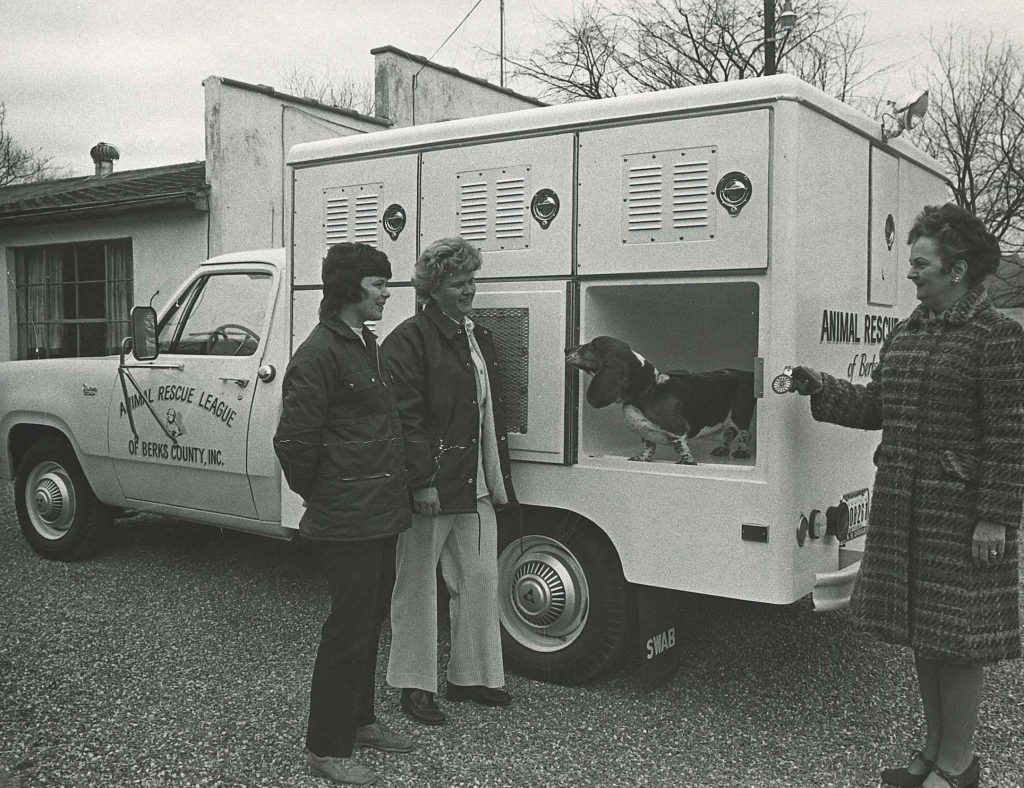
In 1973, the ARL expanded and added a new kennel to house 12 dogs and 20 cats. In the same year, the League purchases a new animal van. Shortly after, as the original kennel got older and began to fall apart in 1977, the ARL started a capital campaign to build a new shelter. The primary sources of funding came from a bequest of $40,000; the Dog Law Division of the Department of Agriculture, who provided $50,000; and a generous donation of $30,000 from Mrs. Wanda Leigh Fidler.
Continuing the expansion, in 1987 the ARL added 4 cat colonies to help the shelter care for and house large groups of cats. A surgery center was built on the premises in 1995 to handle spay/neuter surgeries for all shelter pets. This center was named after Harry Brown, the League’s longest-service executive director, and animal control officer.
In 2002, a six-stall barn and two pastures were constructed on its property to house needy farm animals such as horses, goats, pigs, chickens, and, eventually, barn/working cats.
The last big expansion at the ARL took place in 2008 when the shelter built a new addition, housing administrative offices, meeting space, and a reception area as well as 10 new kennels to keep up with the increasing demand for animal space.
Recognizing the commitment of the ARL to the animals in the community, The Department of Agriculture piloted a program with the shelter where the organization enforced dog law in lieu of a dog warden. These 5-year contracts were renewed twice, lasting until 2017.
A new era
Just a few days after Tom Hubric assumes the executive director role on an interim basis in 2017, the ARL mistakenly euthanizes two owned cats within one month of each other, calling into light the shelter’s euthanasia rates and policies, which created community outrage. Shelter leadership begins reevaluating its euthanasia policies and practices.
As a result, in 2018 the ARL announces the adoption of a “no-kill” philosophy and no longer euthanizing treatable and adoptable animals when it runs out of kennel space. The ARL dramatically increases its cat live release rate from 44% in 2017 to 85% in 2018 and its dog live release rate from 86% in 2017 to 96% in 2018.
Alexis Pagoulatos assumes the executive leadership role at the ARL following the resignation of Tom Hubric in 2019. Covid-19 was one of her first challenges.
As the only open shelter in the county at the time, ARL brainstormed creative ways to remain operational through the COVID pandemic to ensure needy animals had a safe haven to turn to. While the nationwide lockdown slightly slowed how many animals came into the shelter, the ARL team was hard at work with overdue modernization initiatives and intensive staff education efforts that dramatically expand our expertise and capabilities. ARL staff became certified in the Fear-Free Shelter program that greatly improved the animals’ well-being at the shelter and embraced the Human-Animal Support Services (HASS) model, which transforms the way animal shelters care for animals and their people.
In 2021, the ARL launched its first comprehensive and detailed 5-year strategic plan that laid out the organization’s direction and a specific roadmap toward achieving our lofty goals while updating our mission and vision statements and branding. The rebrand paid homage to our past while celebrating our continued evolution into a wider breadth and depth of community programs and services as an animal welfare community center. The launch of ARL’s Pet Help Center and expanded veterinary capabilities marked a dramatic expansion of community offerings.
Leave a Reply