

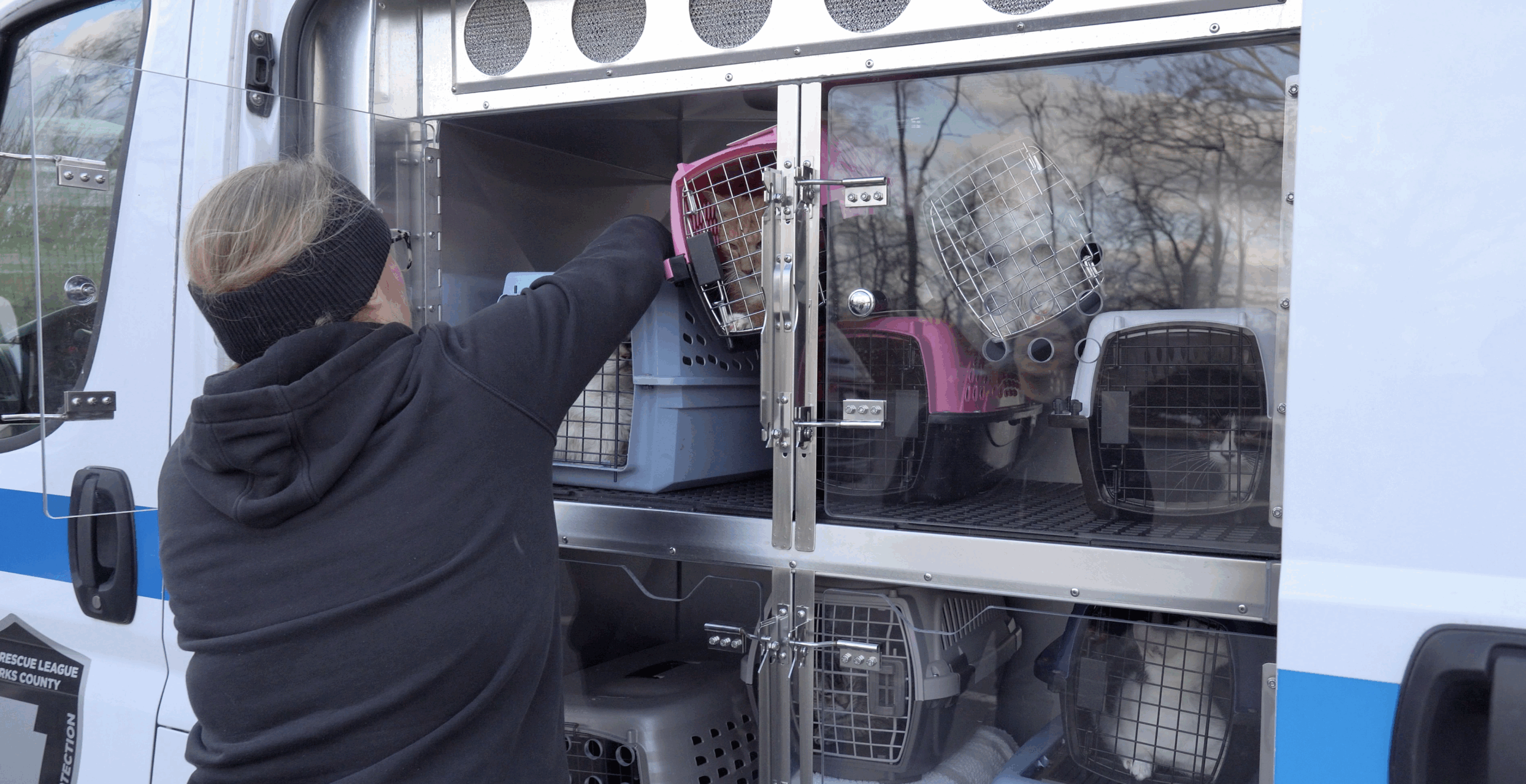
Loving animals and wanting to help them is something we see every day in our community and, in fact, it’s something we celebrate. But even with the best intentions, there are still limits to how many pets one household can safely and responsibly care for. That’s why most municipalities have municipal ordinances that set maximum numbers of animals allowed per residence, along with requirements for pets to be kept in clean, healthy, and humane conditions.
These limits are set by municipalities to protect both the animals and people in their area. When the number of pets exceeds what a home can reasonably support, their well-being can decline quickly. Overcrowding can make it difficult to provide proper nutrition, veterinary care, sanitation, enrichment, and space. It also increases the risk of disease spreading rapidly among animals who share the same environment.
Recently, we witnessed firsthand how challenging these situations can become.
A Real Example From Our Shelter
On December 30, the ARL was requested to assist Reading City Codes Officers with enforcing city ordinances during a high-volume case, resulting in the removal of 22 cats and 6 dogs. Although we were fortunate enough to have open kennels for these animals, thanks to our Home for the Holidays Foster Program, the intake process quickly became complicated. Shortly after arrival, our medical team saw signs of illness that required testing. A few short days later, testing revealed positive results for ringworm and panleukopenia—two illnesses that are highly contagious and can spread quickly through a shelter environment.
Ringworm can be manageable, but requires extensive treatment and strict isolation in our quarantine areas on campus. Panleukopenia, on the other hand, is a serious and potentially fatal virus in cats that requires strict protocols and measures to ensure the safety of our animals. For our staff, the positive tests meant immediate response protocols, enhanced sanitation, isolation areas, and a halt to certain normal operations to prevent further spread to additional animals in our care.
It was a clear example of how a single case made a huge impact in a short amount of time for our shelter and the animals in our care.
Why These Rules Help Everyone
City pet-limit ordinances and health requirements exist to prevent exactly these kinds of situations. When households exceed safe numbers or don’t have the ability to maintain sanitary, healthy conditions, animals have a higher likelihood of disease spread and outcomes for the broader community (including shelters like ours) can become significantly more complicated.
What You Can Do
Responsible pet ownership starts with knowing what you can realistically and legally manage. If you’re unsure of your area’s animal limit ordinances, we encourage you to visit your municipality’s website for the most accurate, up-to-date information.
If you have concerns about the welfare of animals in your community, you can submit an animal cruelty report here: https://berksarl.org/animal-cruelty-and-humane-investigation/
City of Reading : https://codelibrary.amlegal.com/codes/readingpa/latest/reading_pa/0-0-0-6492
Wyomissing: https://www.wyomissingboro.org/DocumentCenter/View/230/Chapter-2-Animals-PDF
Upper Bern: https://upperberntownship.org/wp-content/uploads/ordinances/2011-2019/Ordinance-110-2011.pdf
Leave a Reply