

In honor of her birthday, we are sharing a historic compilation of her life, made possible by the Berks History Center. Enjoy this read and get to know the passionate woman that gave us all the mission of saving the lives of as many animals as possible in our community.
By Ruth Shaffer
Berks History Center
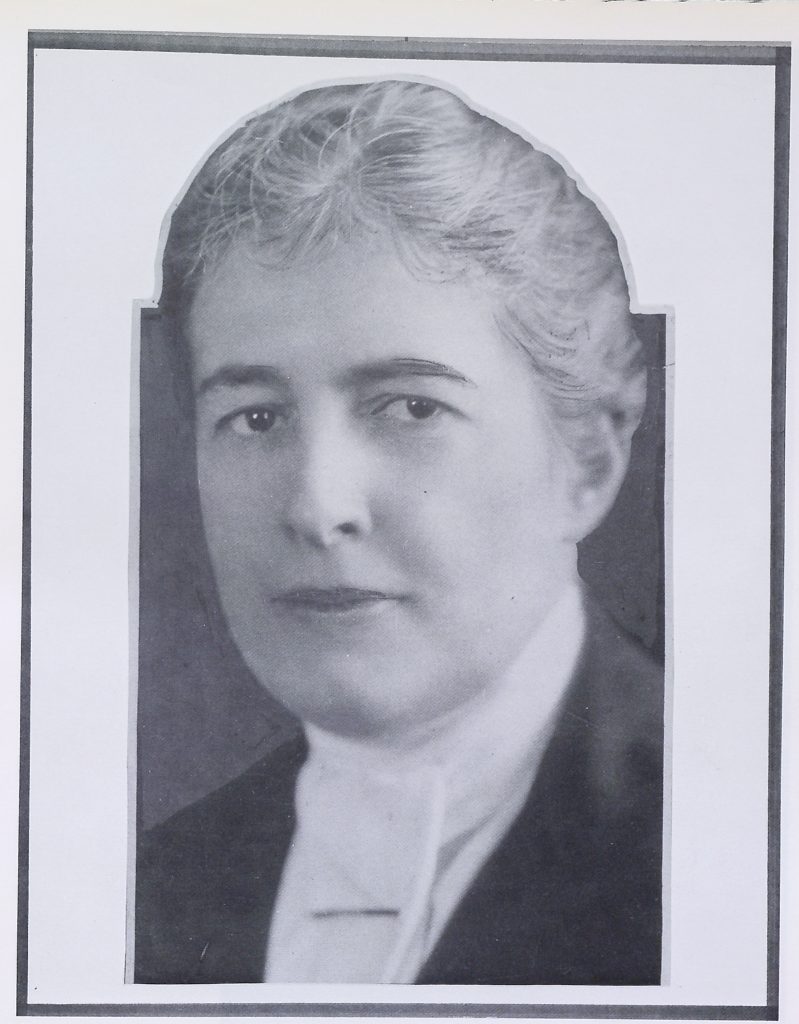
Mary Archer! Most people today, if they recognize the name at all, know her only as of the founder of the Animal Rescue League. In the 1930’s one of her male colleagues said about her: ‘I believe that she is the most loved, the most feared and by some few the most hated woman in Reading.”
So who was this woman who was known as militant Mary, called Miss Mary and referred to as a crusader, humanitarian, activist, and even a stormy petrel?
Born into wealth, she was the daughter of Catherine McManus whose father was well-known in the iron industry of Reading and Berks County. Mary’s father was James Archer, an Irish immigrant who made his fortune in western railroads and the gas and waterworks of Denver Colorado. Her parents were married at St. Peter’s RC Church Reading in 1871, had 2 children, John and Caroline before moving to Denver in the mid-1870s.
Mary was born there on Feb. 13, 1881. A year later her father died, and in the mid-80’s her mother packed up the three kids and moved back to Reading, purchasing a property at the corner of 5th and Spruce, where the Salvation Army is located today. They took their place among the more important families of Reading. In 1909 her mother Catherine died “at her country home in Flying Hill.” That house is still there today along 724. Mary and her sister Caroline lived there after their mother’s death. Mary and Caroline never married; they used much of the family’s wealth to help others.
Nothing is known about her education. She and her sister Caroline do not appear on the list of Reading High School graduates, although her brother John does.
Mary burst onto the scene at the age of 33 when she organized the local Belgian Relief Committee. She led that group until 1918 and under her leadership, Berks County led the nation in per-capita contributions. Proceeds from the sale of a cookbook containing recipes from her influential friends helped raise money for the cause. In 1915 she was selected by the state as Chairman of the Women’s Section of the Pennsylvania Commission for Relief in Belgium.
Also, during World War I, she and a group of female friends, known as the Farmettes, worked on her farm in Cumru raising grain, corn, and other crops to help the war effort. It was part of a movement known as the Woman’s Land Army of America, and the Farmettes became icons like Rosie the Riveter in World War II.
Once the war was over, Mary turned her attention to raising money for the starving Armenians.
If Mary was active in the suffragette movement, there is no report of it, but once women received the right to vote with the 19th Amendment in August of 1920, she was appointed as the first woman to sit on the Democratic National Committee and the First Chairman of the Democratic Women’s Club of Berks County, so she must have been active in Democratic circles.
“The democratic women are going into politics with a scrubbing brush and a pail”, she said. “…a new political era has dawned. Politics has taken unto itself a wife and the political wife is not going to be the quiet sit-at-home type which takes no interest in the affairs of the world.” (Reading Eagle, August 27, 1920) she described herself as a Woodrow Wilson Democrat – a supporter of progressive legislation and an advocate of the Wilsonian foreign policy. Mary called the 1920 Republican candidate for President Warren Harding “the artful dodger” because whenever the question of woman suffrage came up for a vote, he was not present.
In 1922 the Philadelphia Ledger reported: “how a woman leader, and one who not long since could not have been called anything but a rank amateur, upset the plans of the entrenched male politicians is the story one brings back from an invasion of the Berks-Lehigh Congressional District. The leader in question is Miss Mary Archer, of Flying Hills, near Reading, and she is the Democratic National Committeewoman from Pennsylvania….it is predicted her action will cause a wholesale realignment of the Democratic forces of the county.” One Philadelphian observed: “I understand she is quite a figure in the party, and as a rule, she is pretty sane too. I had always thought that women who went in so strongly for politics were a bit radical, or erratic….she is a very bright woman and active in all sorts of welfare work beside her politics. And she is always finding some new hobby to ride.”
In an interview with the Ledger Mary admitted to being a feminist and insisted on equal rights and equal representation, but did she believe in a woman’s party? “Heavens, no!….have you ever been in the woman’s hotel? Not a man in the place. It is so quiet, so –so institutional….it is just as clean and comfortable as it can be —and so moderate….I do like a few men about. It is so interesting to argue with them.”
In 1923 Mary published a playlet for a puppet show – “the truth, the whole truth and nothing but the truth.” The characters included the following descriptions: “vested interests” – disguised as the Republican Party wearing an elephant head; “political machine” – servant to vested interests; “campaign speaker” – dressed as a magician; “Congress” – wearing a dunce cap; “baby” – insatiable child of vested interests, who is hungry for a railroad bill and a tax bill; “doctor” – who claims to be an economic expert; “woman” – who wants a prosperous and happy country where laws are made for the benefit of the whole. (She is accused of being a Democrat.) “farmer” and “forgotten man” – much worn and tattered, with heads tied in bloody bandages from being victimized by a Congress controlled by vested interests and political machine.
In that same year, in 1923 Mary founded the Berks County Prison Economy Committee, a group of citizens dedicated to making prisoners as nearly self-supporting as possible and turning them back into society as useful members of the community.
In 1924 she attended the Democratic National Convention in New York City. She thought she was going to have a nice time, but tickets were scarce and there were various political factions. The seats allotted to Mary and her workers were given to Al Smith enthusiasts and delegates from other states. Mary raised a ruckus in the Pennsylvania Caucus but she was rudely shouted down, which drove her to tears. She was deposed as PA’s National Committeewoman and replaced by a woman more friendly to the Pittsburgh faction. Mary’s supporters were furious and Mary was disgusted. “Politics has seen the last of me for some time to come. When this convention is over I’m going back to my cabbages.”
The 1924 election resulted in a Republican landslide for Calvin Coolidge. As Chair of the Berks County Democratic Women, Mary was quoted as saying “we will carry on.”
In 1927 opponents of the prison reforms accused Mary and the Economy Committee of wanting to build a million-dollar deluxe prison and of wanting prison labor to supply their candidates with cheap labor at 25 cents per day. Mary sued for libel. The labor advocate newspaper said: “here’s hoping Mary Archer loses her lawsuit against those politicians. If you can’t do a little lieing [sic] in a political campaign, where will the fun come in?”
Mary also was leading a fight to preserve Penns Commons as a city park. In 1927 the committee won a legal battle to restrain the City of Reading from building a new City Hall in the park.
In 1927 the Pennsylvania Democratic Women met in Reading to create a state-wide organization of women free from the dictatorship of a group of men. Mary gave an address contrasting the influence of women in politics before complete suffrage to the situation in 1927. “…we could make ourselves felt only by indirect means. We could try to influence our husbands or our sons. Now we don’t have to…God gave us our job.”
During the Presidential campaign of 1928, in a talk on prejudice, Mary told of anti-Smith propaganda being distributed among farmers in Berks County and deplored the injection of religious issues into the Presidential race. Keep in mind that she was a devout Catholic.
If the 1920s saw Mary involved in national politics, with the election of FDR and the new deal in 1932, Mary’s efforts turned more local. During the depression, she and her sister Caroline provided money and work on the farm for the jobless and homeless, and Flying Hill’s farm also became a haven for all kinds of canine and feline strays as well as home to the prize cattle the sisters raised.
In 1931 Mary was appointed to fill a vacancy on the Board of Prison Inspectors. The Prison Economy Committee had presented her name and secured 5000 signatures in two weeks. She was the first woman to be elected to any Berks County board or office.
The new jail on the Essick farm in Bern township was going to be opened and the Prison Economy Committee urged the County to adopt the so-called modern prison system. Mary’s first board meeting was characterized by members throwing charges at each other and attacking the county commissioners with terms that included “arrogant, wasteful, and inefficient.”
The controversy referred to in the newspapers as the “Prison Farm Fray” went on for months and even years. It was basically a row over control of the land. The inspectors wanted to keep all the property to be used as a prison farm. The commissioners wanted to limit the jail property to 54 acres and use the remainder for other purposes.
After an inspection of the new jail, the committee found fault with the construction. Mary said, “it is so full of hazards as to make it unsafe for prisoners and public.” Commissioner Ringler said that was “a lot of baloney.”
Mary fought several battles as a member of the prison board. She was famous for her knitting needles. She attended meeting after meeting quietly knitting away on a red sweater but said nothing. It was her way of reminding the board of her charge that a more or less notorious prisoner had sought a prison inspector’s favor by bribing him with a red sweater.
The squabble with the commissioners came to a head in early 1932 when the commissioners posted “no trespassing” signs on the prison building, property, and farm. Mary ripped them down and the board refused to surrender the keys, the land, the buildings or the livestock.
In October of 1932, the Prison Warden threatened to resign, accusing Mary of a lack of co-operation and the President of the Board ordered that Mary be accompanied by a prison guard to protect her every time she visited.
In 1934 the D.A. refused to meet with the Prison Board until statements made by Mary were retracted. He said she denounced him as a person unable to conduct an impartial investigation of irregularities at the prison and also accused him of protecting bootleggers. Mary’s reply: “Should Mr. Wanner see fit to remain away on account of my presence it will not be a source of irreparable grief to me.” She further asserted that she did not use the word ‘unable.’ “What I think I said, certainly what I meant was that he is totally unfitted both by temperament and associations to conduct any such procedure.”
She charged the operation of the prison farm with graft and corruption saying “When I told the…Prison Board some time ago…that it ought to be investigated, they just sat there like dumb oysters with their head buried in the sand and did nothing.”
In 1936 Mary took the Prison Warden’s dare to spend a week working at the prison and determined that times for doing things could be reduced by using a better and more efficient system.
She was re-elected for several terms and continued her fight for improved conditions for the prisoners at the new jail which was already in need of repairs only a few years after being opened.
As the depression ended and World War II began, Mary once again prevailed upon her friends and the community to aid the peoples of Great Britain, Poland, and Greece. In 1942 she was elected President of the Women’s Democratic Club of Reading for the 22nd year.
In 1949 the Archer sisters turned over a large portion of Flying Hill farm to a Benedictine monastery from Wisconsin. A church was begun there in 1955 which became St. Benedict’s and then they became members there. Green Hills Manor is now at that site.
Animals large or small always played a key role in Mary’s life. She cared deeply about them, worked diligently to protect them. She was a member of the Humane Society of Berks County. In the early 1950s she and some other board members became dissatisfied with the management policies and the use of animal euthanasia, so they broke away and formed their own group in 1952, the Animal Rescue League. Mary donated 10 acres of her farm and $15,000 to the cause and the first kennel opened the following year.
In 1956 Mary was given a surprise 75th birthday party at the Thomas Jefferson Tea Room. More than 200 guests attended and various friends, relatives, and even politicians spoke of her active and humanitarian lifestyle. At the end of the party, Mary’s parting words were: “I’m not finished yet.”
Mary Archer died on March 28, 1963, in her residence at Flying Hill. The Reading Times said: “The death of Miss Mary Archer at 82 terminated a career that ranged from politics to widespread charities and that earned her the respect of hundreds in the city, county, and state.”
By the time of her death, there was very little left of the family fortune because she had given it all away.
Leave a Reply